

Poemography
As part of the photography group I run in Crowborough, James Galpin and I have set up a challenge for local poets and photographers. The idea is to put your thoughts about Crowborough down in a poem and then offer photographers the opportunity of illustrating one of those poems in photographs. It can be one photo or up to 5. The images and poems will be presented as part of the Crowborough Festival.
Here are the great poems that we have had submitted in a very short time frame, so we are very grateful to those who have pulled out all the stops and got us great poems.
Here there are…
…
Commuters
Early morning, Crowborough Hill.
Commuters moving, heads down, eyes averted
walking purposefully; striding, coasting toward the Brook
in convoy, moving wave-like continuously
flowing, snaking in a mechanical
procession of pedestrian perfection;
maintaining their connection with locomotion,
marching forward stoically, collectively merging
to form a stream of human energy
culminating at Platform One and the 7.46 to London Bridge.
© Jennifer Yates
…
Uphill
Here to stay! New home; new life to face;
New shops and cafes, place to meet with friends;
It’s all uphill from here.
Uphill is fine. Digest the view for miles;
Sprawl of greens and browns; the trees, the towns;
All best seen from up-hill.
Children come. Young legs will find uphill
Is fun! Don’t mind it when the car stays home
‘Cos up-hill isn’t far.
Then they’re away! Time to regroup;
Recoup the tranquil; striding out to take the air
From up there, uphill.
Stiff legs, old heart; eyes and hearing
Not so smart; and the doctor, chemist, hospital
Now all lie uphill.
Here to stop; old life to face from this,
A new place at the top. But will it still be
All uphill from here?
© Anne Acott
…
Crowborough Rides High
You need to look up to Crowborough.
Despite all it’s troubles and ills
Yes you need to look up to Crowborough
As it’s on top of all of them hills.
I know cos I’m a new cyclist
Now decked out in genuine lycra.
Inspired by gold medals
I took to the pedals
Much quicker than being a hiker.
It’s always downhill to begin with
When you’re fresh,energetic, full of vim.
But to get back to home
From wherever you roam
There’s a big hill and the prospect is grim.
So if I’m asked about Crowborough
Coin a phrase that would sum up the town
Well in more ways than one
When all’s said and done
It has it’s ups and down
© Peter Jeffery
…
Adoptive Home
On southern streets I wandered
a stranger from the north,
Friendless and faceless
seeking warmth and welcome,
I flinched from the chill of anonymity
Remote on crowded pavements
I felt my enthusiasm seep
through the cracks
too narrow for my feet
In passers by
my keen eye
tried to seek and meet
a friendly flicker,
a welcome note,
But alas -
community
was
DEAD
on the streets.
When loneliness
ached in my bones
and my heart was beating a path home,
I climbed the summit
of Crowborough
and felt it’s reward
For I met no aversion of eyes
No tight-lipped silence,
but smiles – that shone wide and bright
and warmed my flagging spirit.
In Crowborough,
this Northern soul
found her adoptive home.
© Karen Rollason
…
The air spa village with everglade climate
A convenient stop for city dwellers en route
Whose periods of rest grow with each visit
Allowing their souls to rest and take root.
Organic growth, no heroic gesture
Swelling populous from cluster to mass
Authorities deliver a countryside town
While resistant villagers ignore the class
A lush green heart of triangular shape
Flanked by religion to follow the norm
Once vital bringers of life and support
Now placemakers of architectural form
Disparate gems in available fields
Cherry-picked sites thought wise to convert
Change driven hard by the wealth of the few
No merit paid to Masterplan work
Industrial edge now colouring fast
Increasing receipts fast replace craft
The cattle train connection to capital city
Lends time and skills from provincial marks
Void of the riches that make many towns
The people hold fast supporting their own
Housing and schools come to the fore
Love and compassion rightly home grown
Whilst space is defined by shapes that make place
A town can be made by the sum of its people
Hearts that are shared with ready smiles
Far more worthy than the finest of steeples
© James Galpin
…
Advice On Buying A DSLR Camera
I get asked a lot for advice on buying a new camera, this often comes from someone who has a clear interest in photography and is probably already taking quite good photos with a compact camera and wants to move up a step and go from good photos to great photos.
A DSLR (Digital Single Lens Reflex) is often the best route to take. Single Lens Reflex means you actually look through the lens of the camera via a mirror prism system. Meaning you actually see what you’re taking and a lot of people prefer this over an electronic view finder or using the LCD on the rear of the camera that can often be hard to see in daylight.
A DSLR is probably easier to use than a compact cameras and most interchangeable lens mirrorless cameras. This is because most of the common settings you need to reach quickly are right at your fingertips and you don’t have to navigate your way through complex menu systems on the LCD.
An SLR has great image quality, much better than a compact camera and this is mainly down to the image sensor size, not megapixels! The actual physical size of the sensor is usually referred to as APS-C and is a little bit smaller than what would have been a piece of 35mm film. You can also buy full frame digital SLRs which have the same size sensor as a piece of 35mm film. Most entry to mid-level SLRs have an APS-C size sensor and will be capable of achieving very high quality results. In contrast, a compact camera has a sensor that could be half the size of this or even less, this gives poorer results.
So let’s assume you have decided to opt for a digital SLR, you now have to choose which one!
If you can, I would be tempted to go with one of the 2 main camera manufacturers, Nikon or Canon. You might pay a touch more over other manufacturers but you will give yourself the benefits of having a huge range of lenses and accessories for your camera.
At the time of writing this (10th September 2012), the two current entry-level cameras by Nikon and Canon are:
Nikon D3200
Nikon Website
This camera has super high resolution with a 24MP image sensor.
HD Video recording.
An ISO range of 100-6400 to enable you to shoot in very low-light.
This camera also as an optional wireless adapter to share photos to a phone or tablet!
Nikon have a huge range of lenses that can be used and are perhaps some of the best lenses out there.
From around £480 with the 18-55mm VR zoom lens.
Canon 1100D
Canon Website
This camera has a smaller megapixel count, but still a very healthy 12MP which is capable or producing large prints.
HD Video recording.
An ISO range of 100-6400 to enable you to shoot in very low-light.
Canon have a huge range of lenses that can be used.
From around £360 with the 18-55mm IS II lens.
If you want to know more about individual specs, you can go to the camera manufacturer’s websites which I have linked to under each product or you can compare each model side by side on Digital Photography Review.
DP Review
If you decide to buy either of these cameras you will probably want to buy it with what is referred to as the ‘kit lens’. A zoom lens that is usually around 18-55mm in focal length. These lenses are not the best lenses in the world, but to be honest if you just starting out or coming form a compact you will think they are amazing. The beauty of an SLR of course is that you can add to your kit later on by upgrading lenses etc.
Extras
One thing that people often ask me is how to achieve shallow depth of field, usually in a portrait. They want to take a portrait and make the background blurry. This can be done with a digital SLR fairly easily, but to make this effect look best and most extreme the use of a prime lens is recommended. A prime lens is simply a non-zoom lens, a fixed focal length. This is better for blurry backgrounds because prime lenses tend to have a wider aperture, say f/1.8 instead of f/3.5 on a kit zoom lens – this may not sound all that much but actually it makes a big difference.
Both Nikon and Canon offer excellent 50mm f/1.8 lenses at fairly reasonable price, £80 upwards. Anyone interested in taking photos of their kids or portraits in general should have one of these in their kit bag. The 50mm lens is also useful for other types of photography but I would say portraits is the best use.
A hotshoe flash is also a good accessory. Ideally you would be looking for a model that will tilt and swivel, because this gives you the option to bounce the flash off of a ceiling or wall etc, a much more flattering way to use flash. Obviously check the flash is compatible with your camera model.
A tripod is very useful too, especially if you’re wanting to try night photography or landscape photography. This is one of those ‘how long is a piece of string’ debates, but you can spend anywhere from about £15 to about £1000. If landscapes are your thing then I would recommend opting for a smallish lightweight carbon tripod at around £100.
Top Models
If you want to jump straight to the top there are some great cameras out there at the moment, both the Nikon D800 and Canon 5D MkIII are superb and are probably the best DSLR cameras that we have seen, certainly in this price bracket. So what are we talking about, cost wise? Nikon D800 (body only) from about £2,350 and the Canon 5D MkIII (body only) from about £2,690. In my opinion these cameras are no more difficult to operate than an entry level camera, in fact some might say they are easier. So if you can stretch your budget to buy one of these fantastic full frame digital SLRs then you would be buying some of the best image quality and camera build you can buy.
Photography Course
I offer photography courses and often teach people who have just bought their first SLR. I sometimes give those people advice on what camera to buy before they do their training so they can come along with the camera that suits them best. If you’re the sort of person that does well with reading manuals and looking online for tips then you might be okay, but for those that don’t get on with manuals very well, something like one of my 1-2-1 camera courses would really work wonders for you. I think that between 2-3 hours training will give you the basic knowledge you need to start taking great photograph and go on to gain a greater understanding of your camera. My courses start at £100 and are offered in the south east of England. Please see the photography courses page here, for more information.
Gitte & Richard’s Wedding
I photographed the wedding of Gitte and Richard on Saturday 8th September. It’s always a pleasure and a privilege to attend a wedding and to photograph one is even better. Of course there is a lot of pressure but I’d much rather be photographing real people having a great time than most of forms of photography.
It was a 4 hour hour day for me, starting with bridal preparations then on to the pub to meet Richard and then on to the church. A really warm and intimate wedding and a lovely service by the lady vicar at the church in Hartfield, East Sussex.
After the church I took some more photos before heading on to the reception venue, but we stopped off on the way to visit Richard’s Nan who sadly wasn’t well enough to attend the wedding. Such a sweet lady and nice to be able to take some photos of her even though she couldn’t make the wedding.
The garden venue for the reception was wonderful too, with a marquee and pimms in the afternoon sun.
It was a really hot and sunny day and as photographers know, that is not always the best recipe for photography. This meant using flash more often that I’d like, but that’s what weddings are about to some extent, adapting to the challenges you face.
Here are some photos from the day.
All photographs © Andrew Newson


Fuji X-Pro 1 – Further Thoughts

I’ve had the Fuji X-Pro1 since April 2012 and like anything it takes a while to really get to know it. So for this reason I wanted to add some further thoughts to my first blog post, the review of the X-Pro1.
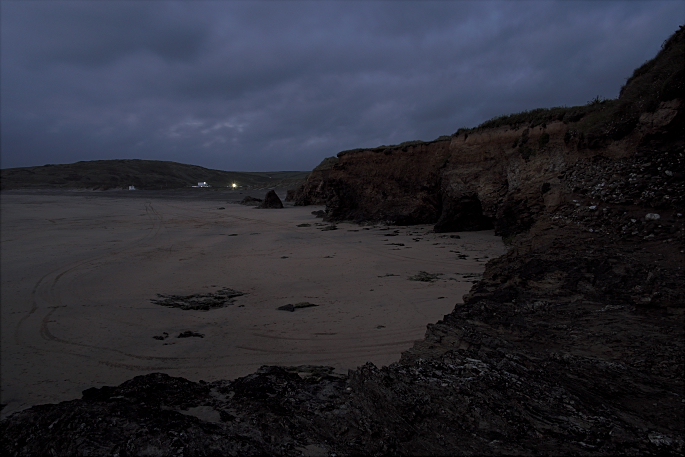
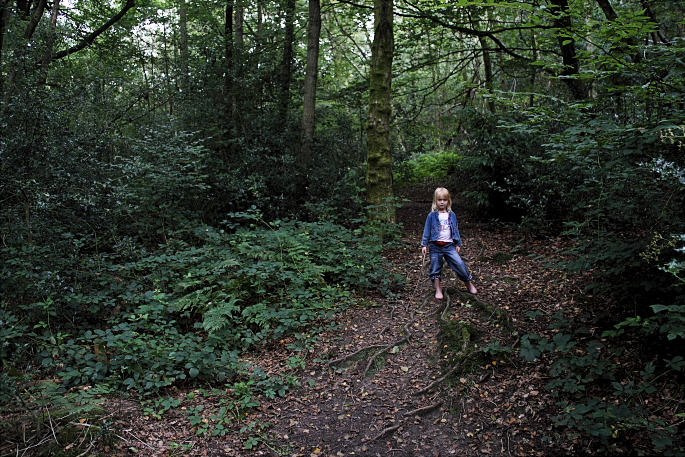
I have been impressed with the image quality of this camera from day 1, in fact beyond impressed, blown away sometimes. The resolution and detail that the sensor can record is really something else. Low light (high ISO) capability is really great. I just had this image printed at 18×12 inches as a digital c-type print on lustre paper. The shot was taken at ISO 1000 and you cannot see a spec of noise in the final print. The detail level is also great, you can see every leaf. The image was taken with the 18mm Fuji XF lens at f/2.5.
But it’s not all good. If you take your photography seriously or at least want the best image you can produce, you shoot in Raw format. You then need to use software to process your files and this is where we hit a slight snag! Adobe Lightroom is my preferred application and at version 4.0 had no support for the X-pro1, they then introduced support with version 4.1, but there is definitely a problem with the results it produces, a strange painterly effect when looking close at the detail. Overall this makes the photo a bit of a mush, it’s acceptable for web but for not for prints. At the moment then the only option is the Raw converter that comes with the camera as part of the SilkyPix package. Horrible! or so I thought at first. I have had to get used to it mainly because it’s my only option right now. Now I am more familiar with it, it’s not so bad and I do love the results that come from it, detailed and nice colours. I feel there is more dynamic range that can be pulled from these files than what this software can do and I also believe that Adobe Lightroom’s tool for removing CA are much better. I still hope that Adobe will be able to fix these issues and I can return to the platform that I really love.
Back on to the camera again, I find the Raw file write times pretty slow, even with a really fast card. Having to wait a second or two (sounds like nothing I know) to view the image you’ve just taken becomes a complete bore. If you have your camera set to preview the photo automatically then you’ll have to wait for this to happen before you can take the next photo – not practical when you want to make sure you don’t miss a moment.
I have two lenses for the X-Pro1, the 35mm Fuji XF f/1.4 and the 18mm Fuji XF f/2. Both really excellent, I suppose the 35mm excels slightly more with image quality, the 18mm is a little soft at the edges wide open but by f/4 it’s fine and too be honest it’s more for landscapes for me anyway, so I’m using shooting at f/8 to f/16 anyway. I have noticed some AF issues, especially with the 35mm lens, it’s not as snappy as what I was used to, a Nikon D700. That’s not that surprising really but the problem becomes a lot worse in low light, it really struggles to find focus. For the most part this doesn’t cause me too many issues for my type of photography but I can see plenty of scenarios where it could be a big problem for some photographers.
Fuji have been pretty good at bringing out firmware updates to improve the camera, in fact the first one came only a week or two after I purchased it. They have today announced a new firmware update (Version 2.0) which promises to improve AF in low light (and bright light) situations. This is a very welcome update and I really hope it does do this but as it’s not out until 18th September, I can’t comment. The next new lenses on the way are the 14mm f/2.8 wide angle and the zoom lens with 18-55mm (28-84mm equivalent). These new lenses have new AF motors and promise to make AF much quicker. I just hope the fantastic 35mm f/1.4 lens will be acceptable when the new firmware update is here. I also wonder if we will see a version 2 of the 3 existing prime lenses (15, 35 & 60) in the future and whether existing owners will be offered a trade-in deal, I do hope so.
The firmware also promises to improve write times to the card, as much as twice the speed! If this is true it will be amazing and a huge step forward for this camera.
Manual focus also gets a revamp to make it much easier to focus. See the full details of the update here.
Back to lenses for a moment, it’s the new ones coming in the Spring of 2013 that really interest me. Especially the 27mm (41mm equivalent) f/2.8 pancake lens and more importantly the 23mm (35mm equivalent) f/1.4! The 23mm lens is the one I cannot wait to get my hands on. Also a 56mm (85mm equivalent) f/1.4 will come a little bit later which should be outstanding for portraits. See the complete roadmap for new lenses here.
So in addition to the current improvements that look to be on there way, I have a couple more suggestions….
1) The EF-X20 flash gun is pretty nice, but there is a very obvious flaw. When shooting with the flash on, when the camera goes to sleep or is turned off, the flash is turned off too. You have to press and hold the flash power button to bring it back to life. In a situation like a wedding for example this is not good at all. The flash should sleep (go in to standby) when the camera sleeps or is turned off. Every other camera I have every owned works this way and I really hope Fuji can fix this with a firmware update.
2) Focus points. You can select one of many points for your X-Pro1 to use for AF. It’s pretty easy to select and change these, just one button and then move the point with the track pad buttons. However for manual focus, given the way the camera works, it uses one of these points as a magnified view to aid manual focus. That is fine but often you want to move these much quicker to the appropriate place and I think having the option to activate the track pad on the back to move it without the need to press a further button may be the answer. Perhaps this is automatically set on when an adapter is fitted and you have the option to tun it off. Someone recently suggested using the current AF lenses focus ring to move the AF points when the focus ring is not in use, ie. in auto focus only. I think this could work really well, providing the calibration of how much movement needed to do this is paid careful attention. Obviously no good for manual focus though.
3) Image Review. I find that the review mode in the X-Pro1 needs a little attention. Currently you can choose to see the large image, the large image with some shooting data or smaller image with histogram and highlights. I’d like to see the option of viewing clipped highlights on the larger image too. Maybe clipped shadow detail too.
4) Auto ISO. I don’t use this too much, but when I have I find it frustrating that it often defaults to a shutter speed of 1/30 sec, which is often too slow. I see in the new firmware update there is a new Auto (6400) option which may help, but I’d like to see each Auto ISO have a setting for minimum shutter speed, maybe 1/30, 1/60, 1/125 options would be nice.
5) Tripod mount. This is position off-centre and just feels weird. Also when a tripod base plate is on the camera you can’t access the battery and memory card door, doh! You can purchase one of these base plates from The Really Right Stuff which will solve that problem. Or the Gariz half leather cases look pretty sexy, also solving this issue. Neither of which I have, as yet!
While on the topic of accessories…
The new Thumbs Up from match Technical looks pretty good. I’ve yet to use one, but I think it might be a useful addition. Not cheap though.
I use a soft touch shutter button too, mine is a plain chrome button and was about 3 or 4 quid from eBay, it works like a charm. Useful tip, put a little dab of clear nail varnish on the screw thread to ensure you don’t lose it! This won’t damage the camera and still works when you remove it (for cable release) and replace. It seems to add a layer of subtle stickiness to it that stays put for a while.
This clear nail varnish comes in handy elsewhere too. Beware that the eyepiece can come unscrewed and you will lose it like I did and so many other people!! Please remove the eyepiece and use a few dabs of clear nail varnish on the screw thread. Hopefully this should keep things together. I purchased this Nikon replacement from Harrisons Cameras – it fits perfectly but is not rubberised like the original Fuji one, which would be nice especially for glasses wearers like myself.
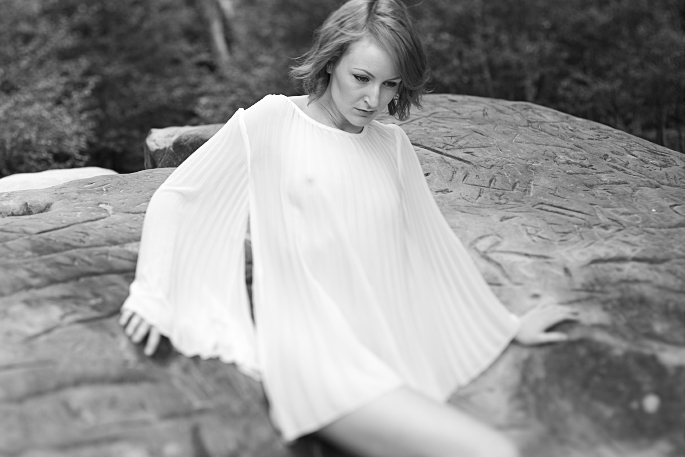
The X-Pro system has a lot of lens adapters available, including the Fuji brand m mount adapter. I purchased a Kipon M42 Tilt adapter to use my Super Takumar lenses, primarily the 50mm f/1.4. This is a really nice combination and you can see a shot above taken with it (Anita).
Of course in addition to all of what I have spoken about above, today Fuji officially announced the X-E1 camera which shares quite a lot with the X-Pro1. It has the same image sensor crucially, so you can get the same great quality. It also includes a pop-up flash which could be really useful, the X-Pro1 doesn’t have one. The X-E1 is smaller and lighter, but maybe at the sacrifice of some build quality – the X-Pro1 is all magnesium but the X-E1 has some plastic parts, like the X100. The X-E1 promises to have faster AF too, but I wonder if that is just down to the new firmware coming and the new lenses or whether the body aids that too – we’ll have to wait and see on that I guess. I suppose the big deal is, the X-E1 does not have the optical viewfinder, just an electronic one, but a higher resolution EVF than the X-Pro1. You can definitely see where they are going with this, it looks like a great back-up camera for pros using the X-Pro1 as their first camera and it’s going to be very tempting for a lot of enthusiasts too.
Then we may get a new X-Pro in 2013, which is quite a short time to bring out a new version. But I’ll reserve judgement on that until the time comes.